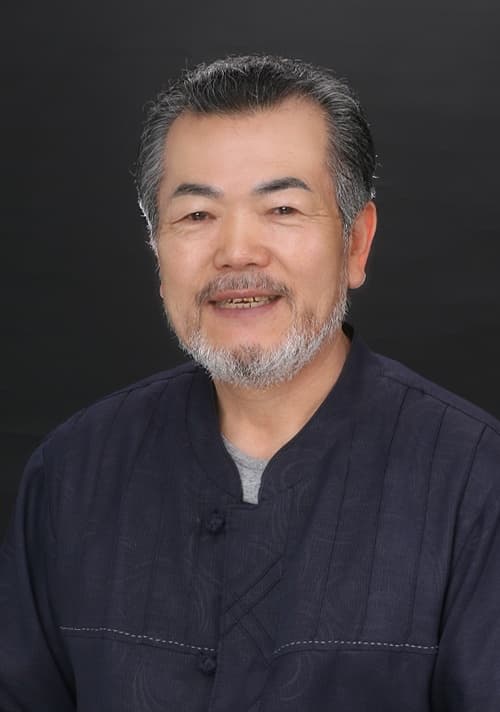
Fascia and muscle care
Park Yang-su
- Anseong-si, Gyeonggi-do
- Korean Healing Research Association
I work with you to relieve pain, restore function, and build a body that stays pain-free for life.
Approach
I see the body not as a sum of separate structures, but as one vast mechanical system in which movement, the nervous system, and the fascial system are organically connected. Manual therapy should be an honest intermediary that gently draws out the body’s inherent movement and restores its natural function, going beyond simply managing pain. I aim for self-directed healing, in which users fully understand their own bodies, manage the discomfort that arises in the course of daily life, and live pain-free throughout their lives.
About
In my youth, martial arts training undertaken to explore the essence of the human body naturally led me to encounter Hwalbeop, one of the finest traditional East Asian manual techniques. This was not simply a technique for touching the body; it became my first signpost toward understanding the body’s interconnected flow.
I later developed an in-depth understanding of alignment exercise methods and self-healing, and learned a wide range of approaches, including Japan’s Isogai Method, pelvic alignment, and Indian yoga. Building on this experience, I worked as a key instructor at cultural centers, local community centers, and projects such as Anseong City Hall’s senior center revitalization program, sharing dynamic alignment solutions to help many people maintain a healthy body throughout their lives. As I taught people to manage their own bodies and restore firmly stiffened tissues to supple “pliant muscles,” I became firmly determined to become an unparalleled specialist in functional medicine, natural healing, and precise manual techniques—going beyond simple, temporary relief.
There is no end to learning. To build a complete foundation in mechanics, I immersed myself in modern, precise alignment approaches, including the fundamentals of muscle science, fascial meridian anatomy, visceral manual therapy, autonomic nervous system manual therapy, Craniosacral Therapy (CST), cranial nerves and nerve mobilization, exercise therapy based on posture analysis, Chiropractic Manual Reflex Technique (CMRT), Sacro-Occipital Technique (SOT), postural relaxation therapy, lymphatic circulation techniques, and Muscle Energy Technique (MET). In 2018, in particular, I completed 30 hours of human anatomy lab training at the College of Medicine, Yanbian University (certificate number 2018071223), where I directly observed and deeply learned through hands-on practice the complex connections among muscles, nerves, and fascial chains hidden beneath the skin. I believe that never giving up books and inquiry throughout one’s life is both the calling and the pride of those who walk this path.
After quietly dedicating decades to work in the field, coordinating these diverse healing mechanisms, I began to intuitively read the body’s language. Even by observing a person’s gait or the slightest detail of their posture while seated in a chair, I can picture in my mind a precise chain of where alignment first went wrong and how compensatory actions disrupted overall balance and developed into discomfort.
When the underlying cause is accurately traced and the body’s axis is safely brought back within the line of gravity, the body’s own homeostasis and natural healing mechanisms begin to work, allowing it to recover its inherent health. Beyond that, I will wholeheartedly help every user lead a physically, mentally, and socially whole and happy life by providing precise instruction in exercises to manage their own body and prevent recurrence, even after full recovery.
Career
- 2014 – 2022Taught Body-Salim exercises, Anseong Nonghyup Community Culture Center
- 2014 – 2019Taught Body-Salim exercises, Anseong Catholic Church Senior College
- 2017 – 2017Taught Body-Salim exercises, Korean Senior Citizens Association Anseong Senior College
- 2015 – PresentTaught alignment exercise therapy, Anseong Medical Welfare Social Cooperative
- 2016 – PresentTaught Body-Salim exercises, Anseong City senior center revitalization program
- 2017 – PresentTaught alignment exercise therapy, Miyang-myeon Residents’ Autonomy Center
- 2014 – PresentDirector, Korean Healing Research Association
Qualifications and training
- Body-Salim Exercise Instructor QualificationBody-Salim Exercise Headquarters · 2013
- Walking Instructor QualificationKorea Walking Association · 2016
- Exercise Therapy Instructor QualificationBody-Salim Exercise Headquarters · 2016
- Senior Health and Care InstructorKorea Federation of Medical Welfare Social Cooperatives · 2022
- Autonomic Nervous System Disorder Manual TherapyKorean Society of Manual Medicine · 2016
- Sacro-Occipital Technique (SOT)Korean Society of Manual Medicine · 2016
- Chiropractic Manual Reflex Technique (CMRT)Korean Society of Manual Medicine · 2017
- Craniosacral Technique (CST)Korean Society of Manual Medicine · 2018
- Postural Relaxation TherapyBaek-eok Shop Academy · 2018
- Cranial Nerve and Peripheral Nerve MobilizationBaek-eok Shop Academy · 2019
- Cerebrovascular Manual TherapyKorean Society of Manual Medicine · 2020
- 30-Hour Human Anatomy Lab TrainingCollege of Medicine, Yanbian University · 2018
Specialties
- Fascia and muscle care
- Posture and movement analysis
- Body shape analysis and care
- Discomfort management
- Recovery movement
Recent answers
- Lower Back & PelvisMy back buckled when I stood up while holding my childIdeally, I should first explain the principles of mid-wiaekhak and non-mid-wiaekhak in technical terms, but....... To make it easier to understand, I suspect that while carrying your child and exerting force with your upper body twisted, one of the five lumbar vertebrae shifted slightly and the muscles were strained. Sometimes it improves after about 3 weeks, but if it persists, please seek help from a professional. In cases like this, it is difficult to heal on your own.
- Lower Back & PelvisI wake up in the early morning because my lower back hurtsThese symptoms may be due to excessive tension in the quadratus lumborum, which runs from the ribs to the iliac crest. When the quadratus lumborum is stiff, you may feel pain even if you twist your trunk while sleeping, regardless of your position in bed. It tends to be especially painful when you first get up in the morning, but the discomfort may ease as you move around and the muscle loosens. To try addressing it yourself, stand and bend your whole body sideways to stretch the quadratus lumborum; this may help. In cases like this, the issue is often not limited to the quadratus lumborum and may be related to overall pelvic misalignment. For that reason, it is a good idea to have your overall body alignment assessed and your body realigned with professional help. Consider seeking help from a BodyRipple professional or a nearby orthopedic clinic.
- Knees & FeetMy toe hurts because I have a habit of trimming my toenails in a rounded shapeAn ingrown toenail, where the edge of the nail irritates the skin, and inflammation around it are suspected. A habit of cutting the nail short and rounding the corners may be the cause. For now, don’t dig further into the painful corner, and wear shoes with a roomy toe box. Once the nail has grown out, it’s best to trim it straight across without cutting it too short. If the area repeatedly swells and hurts when you walk, have it checked by a dermatologist or orthopedist. The entire toenail does not need to be removed; depending on the condition, only the affected area can be treated. Seek treatment early if there is pus, spreading redness, or warmth.
- Knees & FeetMy heel hurts like it's tearing in the morningI suspect that the muscles at the back of your lower leg—the gastrocnemius, soleus, tibialis posterior, flexor hallucis longus, and extensor digitorum longus—have shortened, causing your foot to become deformed into an equinovarus position, with the calcaneus in a flexed position. This deformity can put the plantar fascia under severe tension and cause it to stiffen and become inflamed. In other words, you can think of it as a severe case of plantar fasciitis. The pain is worse right after you get up in the morning or stand up after sitting in a chair, then eases as you force yourself to move and the muscles listed above or the plantar fascia loosen up a little, right? If you have equinovarus, your knees, hip joints, and pelvis should also be checked. For now, gently loosening the area with calf massage and stretching may help a lot. The fundamental solution is to correct the deformed foot. If you consult individually with a BodyRipple expert and get help, you should be able to recover without difficulty.
- Knees & FeetI’m fifty, and my knees make noisesKnee noises do not necessarily mean that cartilage is being damaged. If there is only noise and no pain, swelling, or restricted movement, treatment is generally not needed. However, the absence of pain alone does not prove that the cartilage is normal. Clinically, accompanying symptoms and changes in function matter more than the sound itself. If you develop pain or swelling, locking that prevents you from straightening your knee, or a feeling that your knee is giving way, it would be a good idea to seek medical care.
- Neck & ShouldersMy neck has been aching ever since I movedRepeatedly lifting things while moving can put more strain than usual on your neck and shoulder muscles. Pain can develop from repetitive work even if you don’t feel that you overdid it. However, if neck pain is accompanied by hand tingling, it’s important to check not only for muscle tension but also for possible irritation of the nerves that run from the neck into the arm. These symptoms alone are not enough to conclude that you have a herniated cervical disc. Since there has been no improvement for a week and your hand is tingling too, I recommend having your neck and shoulder movement, as well as sensation and strength in your arm, assessed by an orthopedist or rehabilitation medicine specialist. For now, reduce heavy lifting and movements that trigger your symptoms, and move gently within a pain-free range. It’s best to avoid intense stretching or movements that twist your neck. Seek medical care promptly if your hand becomes weak, you frequently drop things, the tingling worsens, or you develop difficulty walking.
- Exercise & StretchingMy muscles shake after stretching. Is that okay?You don’t need to hold a stretching position until the trembling stops. First release the position and rest; next time, reduce the intensity and duration. Stretch only to the point of a gentle pull, without pushing through pain or bouncing. Clinically, the first thing to distinguish is whether your entire leg shakes while you hold the position, or whether part of a muscle keeps twitching after you finish and are resting. It is not possible to determine the type of trembling or its cause from the question alone. Temporary muscle trembling may be related to fatigue, but there is no basis for interpreting it as a sign that the muscle is loosening well and continuing to stretch on that basis. If it recurs even at rest or lasts more than 2 weeks, I recommend seeking medical care.
- Muscles & FasciaI’ve Heard I Should Release the Tibialis Anterior—How Do I Work on the Front of My Shin?I’ll explain this in a way that is easy to understand and follow. * Place your leg on a desk or another table. * Bend your knee to about 60~80 degrees. * This will bring the tibialis anterior, which lies between the tibia and fibula, into contact with the surface. * Place a tennis ball, baseball, half-moon-shaped piece of wood, or similar object in that space. * Lean your upper body forward and apply gentle, steady pressure. * Apply pressure for 6 seconds. * Use enough pressure to feel a slight stimulus—pressing harder is not more effective. * Repeat until you get a satisfactory result. -----Doing too much at once may cause pain the next day due to an inflammatory response in the muscles. If you have pain, it is best to rest for 2~3 days until it settles before trying again.-----
Experts on BodyRipple share general information about movement and everyday habits. It is not a medical diagnosis or treatment. To ask this expert a question, use the Korean profile.